
Geothermal homeowner guide
Geothermal Hot Water: Desuperheaters & Water-Heating Options
A geothermal system can help heat household water, but the words “hot water included” do not describe a complete installation. First establish whether the proposal includes supplemental desuperheater heat, dedicated water heating or a separate water heater. Then identify the tanks and the equipment that finishes the job.
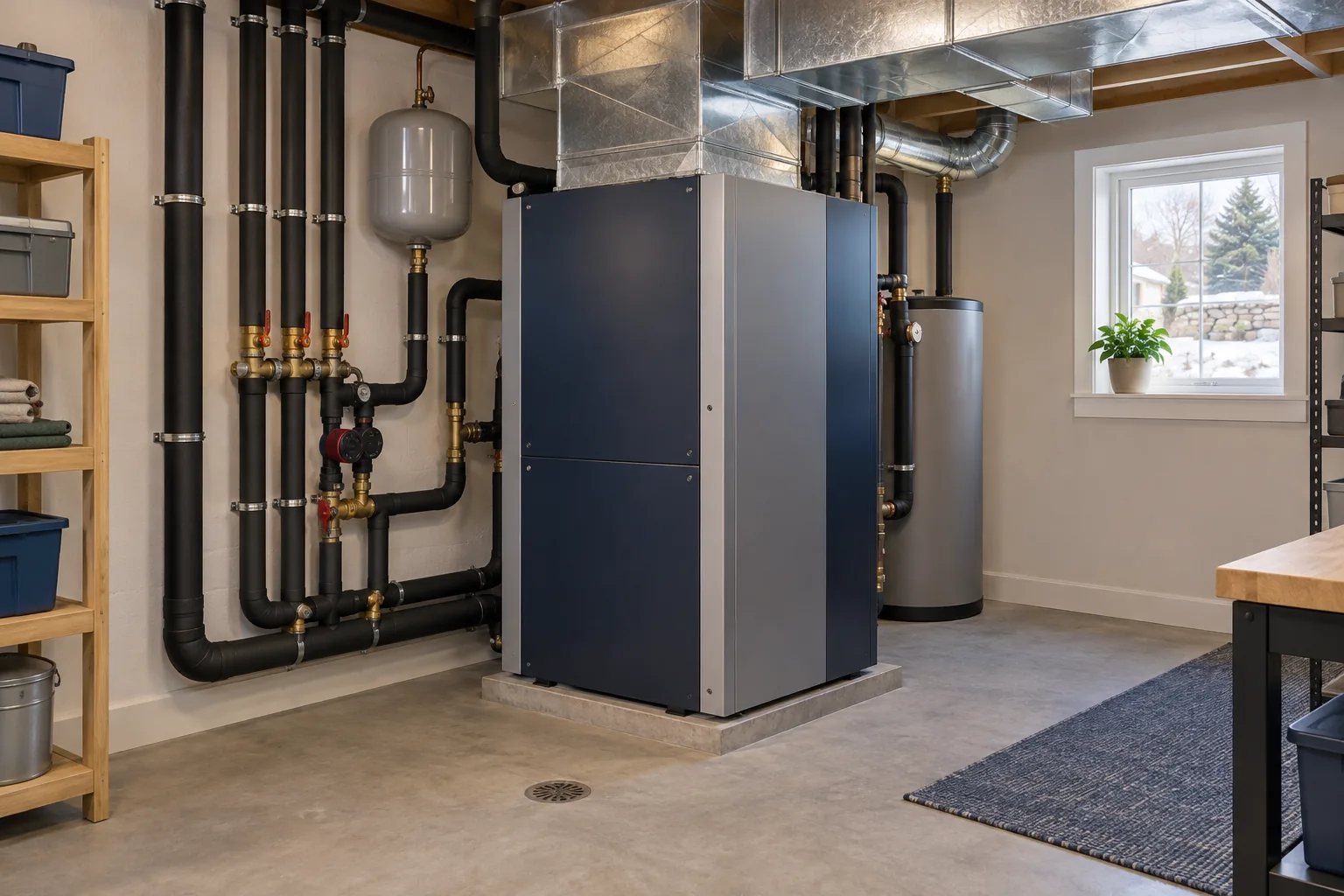
What a Geothermal Desuperheater Does
A desuperheater, also described as hot-water assist, transfers heat from the geothermal unit’s refrigerant circuit into a domestic-water circuit. It assists water heating while the geothermal equipment operates. WaterFurnace’s owner’s manual explains that output depends on model and run time, and describes both one-tank and two-tank arrangements.
That dependence matters in mild weather, when space heating and cooling may run less. Ask which appliance will maintain hot-water delivery during those periods. A hot-water-assist feature is not enough evidence to remove the existing water heater or assume that every shower will be supplied by recovered heat.
Desuperheater Storage Tanks & the Finishing Water Heater
Have the installer label each proposed tank by its job. Is it holding preheated water, actively finishing the water heating, or serving another purpose? A two-tank drawing should make the flow and responsibility of each appliance understandable without requiring the homeowner to interpret a plumbing schematic.
Keep the existing tank’s condition and suitability as separate questions. “Reuse water heater” should identify the retained appliance and the assessment behind that choice. Ask where new equipment will fit, how it can be serviced, and what changes are needed to the surrounding plumbing and electrical work. A useful quote names those items rather than leaving them inside an unspecified connection allowance.
Dedicated Geothermal Water Heating Is a Different Equipment Plan
A water-to-water geothermal heat pump can be selected for water-heating applications. For example, WaterFurnace’s 500W11 product information describes hydronic equipment used for domestic hot water and specifies a secondary heat exchanger for that application. That is a product-specific example of the additional integration a design may require.
Ask whether the proposed system has a dedicated water-heating task or merely recovers heat during space conditioning. If one system serves both room heating and household hot water, ask how simultaneous demands are handled and what storage or supplemental equipment is included. Require the selected equipment’s documentation to support the arrangement. A general “hydronic” label does not establish approval for direct potable-water use.
Geothermal Hot Water vs a Separate Heat-Pump Water Heater
A standalone air-source heat-pump water heater draws heat from surrounding air and transfers it into its tank. It operates separately from geothermal heat recovery. DOE’s water-heater explanation notes that most are hybrids with an electric-resistance element and that installation has air-temperature and space requirements.
Compare that option on its own installation terms: available location, tank size, first-hour delivery and access for service. Follow the selected model’s requirements rather than assuming any basement corner will work. If an existing water heater needs prompt replacement but geothermal installation is still being planned, ask both contractors to coordinate the sequence before purchasing a tank that the later design may change.
Describe Your Home’s Hot-Water Demand Before Choosing Tanks
Give the designer a picture of how the household uses water. Note how many people live there, whether showers overlap, whether a large tub is used, and whether the existing system runs out during a recurring routine. Separate present use from an upcoming bathroom addition or occupancy change.
As an example, “two showers sometimes run together before school” is more useful than “we need a big tank.” Ask how the proposal addresses that demand and which capacity or delivery information supports the answer. Do not select a tank from household size alone. Record whether your concern is insufficient quantity, slow delivery to a distant fixture or an equipment fault; have each concern addressed explicitly.
What a Geothermal Water-Heating Quote Should Include
| Quote item | Answer to obtain |
|---|---|
| Water-heating method | Desuperheater assistance, dedicated geothermal equipment or an independent water heater. |
| Tanks and retained appliances | Model, purpose, location and responsibility for each new or reused component. |
| Connections and controls | Included plumbing, electrical work, heat exchangers and operating coordination. |
| Completion and support | Start-up checks, homeowner instructions, maintenance requirements and warranty documents. |
Ask the bidder to explain the result when the geothermal unit is idle and when household hot-water demand is high. Keep any forecast of water-heating savings separate from the installation scope, and request its assumptions. This guide does not supply a percentage that can be applied to every home.
Add Hot Water to Your Syracuse Geothermal Project Brief
For a new system, include water heating in the geothermal installation scope from the start. For an existing geothermal home, identify which hot-water feature is present before requesting equipment replacement, so the proposal can state whether that function continues.
Use the retrofit map to organize the overall home project, then add your tank details and hot-water questions in the geothermal quote planner. The useful outcome is a defined water-heating plan with responsibilities for every appliance and connection.